Godrej Industries Limited
11-Jul-10 2 Comments
 Once while coming to work in an auto-rickshaw, I had the great fortune of being driven by an extremely chatty driver. The good man had loads of original theories on how to solve India’s population problem. Uttar Pradesh (UP) in particular. I’m sure you must be aware of the standard chestnut where applicants to consulting or other weird jobs are called to estimate the number of some random widgets in a given geographical area. Well, this rickshaw driver sure can make it through any of these interviews. If only he was a bit more suave and lettered. In a span of a few kilometers, with wheels turning at not more than 30kmph, he picked out the population of present day UP, logically assumed the number of “useless” people above 50 years and under 10 years of age, and logically devised a plan to eliminate them etc etc. While we turned an oft turned turn, he got pretty excited on seeing the Godrej premises in Vikhroli (a suburb in Mumbai) and started telling me that the Godrejs are actually from UP. I was hooked though I really was not too interested in the ansectoral origins of the Godrejs. Rick man confidently asserted that the real name of Godrej (which of the Godrejs’, I dared not ask 🙂 ) was actually some XXX Thakur. I forget the first name that he mentioned but it sounded pretty lyrical. According to him, this XXX Thakur came to Mumbai penniless and worked very hard in the city of opportunities. To muck in well and to sound important, he took on the title of Godrej. “What does the name mean?”, I had asked him keeping a wary eye on the meter for my office was near. He did not know. We’d turned off the main road and gotten inside the office premises and this guy got further excited upon noticing a railway line that passes behind the building. According to him, the Godrejs wanted to build a railway station bang between Vikhroli and Ghatkopar (neighbouring suburb to Vikhroli) but could not since they would not bribe – or something to that effect. It was a very interesting trip (some 7 – 8 months ago) – before this there was also some talk about a lady doctor who used to hire his vehicle daily and a young woman who used to work in the doctor’s clinic, but that story is out of context and a bit crass to mention. But please do pick the brains of auto rickshaw drivers of Mumbai (or any Indian city for that matter) – they are quite a chatty lot and they work quite hard.
So that was it – but I think that there are two points here about the Godrej Group that seem true. First is regarding corporate governance and citizenship. It’s one of the most respected business groups in the land and for good reason. I really don’t know (nor care) if the story regarding the railway station between Ghatkopar and Vikhroli is true or not. The second point is that Godrej & Boyce has given a massive, Massive, MASSIVE chunk of land in Vikhroli on a 99 year lease to Godrej Industries Limited who have further given the developmental rights to Godrej Properties Ltd. (IPOed in Jan ’10). Now, in 1985 there was a company called Sea Breeze Construction owned by Mohan Khubchand Thakur and Desiree Mohan Thakur which came into the Godrej fold in 1989. So that’s how this yarn must’ve been spun!
Anyway, maybe the rickshaw drivers of India deserve a seperate post for themselves but the real purpose of this entry is to record one of the things that has been occupying my mind for fair measure: Godrej Industries Limited as an investment opportunity. I had some excess cash recently and wanted some parking place for it. Fixed income is not really me – bonds/debentures and National Savings Certificates, Company fixed deposits et al. I bought some amount of gold (in the form of units of an Exchange Traded Gold Fund) but I still wanted some occupation for my idle funds. Finally, I picked up Godrej Industries as one of my core holdings. Equity is where I usually am and equity is where I usually will be for the next decade or so.
While there are short term predictions by various “experts” that the share price will reach 184 – 190, this is one purchase of mine where I haven’t stared at the charts too much. For the following reasons:
- Its a holding company. Usually, in India – holding companies always trade at a significant discount to their net asset values. If someone does a sum of parts of all the asset values of a holding company, compares the sum with the current market cap and therefore presents a “deep value” kind of spiel, please do not give in. Caveat Emptor. Discounts of 40% – 50% are also not unknown.
- Market is almost always right. On the very rare occasions where it is not, the effect can be seen quite tellingly on the charts. Moreover, well known, highly capitalised and liquid counters are covered very well by the stock analyst community. Information tends to me less assymmetric (though in India, you never know!) – which means that the chances of hitting a home run based on some insider info is rare. Moreover, we all must feel some security and trust in a name that has been synonymous with locks in India.
- But I read somewhere that the market does not or does not want to see too far out. It’s view is limited to 6 – 9 months. For good measure. The market participants which ring in the most volumes – who are not you or I – need to keep an eye on churning their capital. Most of it borrowed.
So why look at charts excessively, if its sticky money that you want to deploy? And as I said in a previous post – it’s not when you buy that matters. It’s your selling point that makes all the difference.
Not that I looked at anything else, for that matter. 😐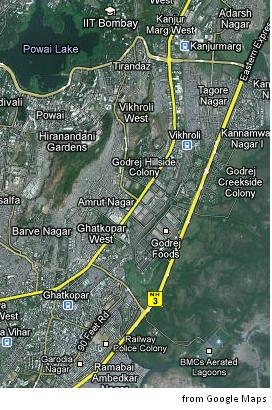
It gives us a diversified play – property, consumer goods, agrovet, chemicals, etc. The “etc.” is not an after thought – there are indeed other small diversified business units. For example, going back to my autorickshaw trips – earlier I used to wonder as to why Geometric Software’s office is in Godrej’s property (same locality as the venue of the opening narrative) – but there was no motivation to find out – recently (as a result of reading up on Godrej Industries) realised it’s Godrej connection. Godrej Industries owns 100% of Godrej Chemicals, 75.2% in Godrej Agrovet, 69.4% in Godrej Properties, 23.4% in Godrej Consumer Products, 43.4% in GHL. Price discovery seems full (maybe even a tad high – who really knows what discount to its NAV is ideal?) – but to me it looks to be a steady compounder over 4 – 5 years. Godrej Properties came out with an interesting concept – of real estate developers not necessarily having to own the land parcels on which they build. The company also announced plans of increasing their focus on low income housing. But the jewel in the crown seems to be the Vikhroli land. All this is known since ages and factored into the price – but the market is sometimes myopic. So maybe the game is on.
At first glance, the PE also looks high – but companies that are turning around and turning black – usually have high PEs which fall back in line as the earnings catch up.
My notes on this are quite long and there’s really no point in going further. Maybe I will restrict writing about Godrej Industries once a quarter. Two last points
- I really like shopping at Godrej’s Nature’s Basket. Mostly in Mumbai, a couple in Delhi and Bangalore. One Mumbai outlet is bang below my home. Till date, if I have ever cooked anything – the ingredients have been purchased at my local Nature’s Basket outlet. Will post pics of my cooking disasters later.
- 4.5 acres of land in Mulund (another suburb in Mumbai) recently changed hands at ~200 crores.



 The Third I
Recent Reactions