SEBI and other things

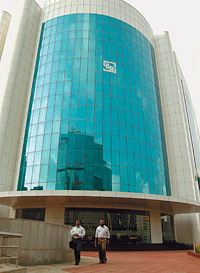
The Securities and Exchange Board of India has been in cracking form last week. Or so it seems. I like reading about C.B. Bhave and SEBI – the comment of one of my professors, “SEBI should be plucked and thrown into the Arabian Sea” notwithstanding. But that was in mid 1998 when D.R. Mehta was its Chairman. More on SEBI shenanigans later. Some of the things that caught my eye:

–          Increase of retail portion for application to IPOs to INR 2 lakh. Which is cool if we keep seeing more issues like Coal India Limited. I do not personally like to invest in IPOs but issues like CIL make one happy given the 5% discount to the retail rats. Moreover, in the case of CIL, the quality of paper was good as also the huge institutional interest. I have not done much snooping around on the internet to figure out what the allocation is likely to be but I am hoping for a 12% – 15% return in less than a month’s time! Let’s see. My means and expectations are modest.

 –          Crackdown on shady promoters who keeping issuing warrants to themselves at a steep discount during bull runs. Since most of the conversion money is to be paid during the warrant exercise date,  a sudden correction does not cut too deep for such warrant holding promoters. So this is a good proactive step in favour of minority shareholders. I was in the ‘minority’ report of Shakti Met Dor before I sold out on 07Oct’10 at a loss of 5%. The promoter credentials and their move to delist the company at what appears to be an artificially suppressed market value did not enthuse much confidence. FIIs have come in and done their bit in India but this stock has stuck to its price since the time I sold out. Good riddance.

–          IPOs for insurance companies. Nice! For once, the IRDA agreed! I am sure many more of those emotional HDFC Standard Life ads will start hitting the boob tube in a year or so. This is one good step towards the opening up of the insurance sector. Currently, there is a cap on how much Foreign Direct Investment (FDI) an Indian partner can bring in into its insurance venture. I do not know why Pranab Mukherjee cosies up so much with the IRDA but there was a recent soundbite where he observed that SEBI and IRDA were quarelling like petulant children. Was the ULIP bickering set up by New Delhi so that the Finance Ministry gets a firmer grip over SEBI?

– Options will now feature European exercises as well. As if they were not complicated enough! Europeans are cheaper than Americans so its good. The latter can be exercized at any time during the contract period while the former need to triggered only at the end. I don’t think I give a rats ass to European or American methods of exits. All I want is cheap long dated index options and I will be happy in my bermudas. I have such simple needs.

– The Mutual Fund industry squarely blames SEBI for rendering it comatose. There has been so much of bleeding with investors taking out money from fund houses’ coffers that the latter are now resembling leaky ketchup factories. Three blows fell really:

        Punch on the MF nose: Banning of the entry loads

        Ow! The stunner left hook: All strata of investors in MFs to have similar exit loads.

        Knock Out…the final uppercut: Mark your debt assets at the market.

These are good moves from the end (read small) investor point of view but if there is no sea then there’s no fish either, right?

–          And the clincher: SEBI will now be the sole regulator of all organized financial transactions. The IRDA, the Reserve Bank of India (RBI), the Forward Markets Commission (FMC) will all accede to it. RBI’s star seems to be in its descendent. You probably know that the Government of India is the bigger debtor of the nation and therefore the RBI. So what do you do if you cannot repay? If you a small, wretched villager in Andhra Pradesh distressed in some micro debt you’d commit suicide. But if you were the GoI you’d want to print more money and debase the value of your debt. Recalcitrant RBI guvs have always been a thorn in the flesh for the Finance Ministries at Delhi. Try noticing this – every time Pranab Mukherjee says something regarding exchange rates, inflation control, the FII ‘hot money’ pat comes the counter-view from the RBI guv. Also note that the FM’s view is part of a major front page story while the RBI piece typically appears one day later and its hidden somewhere in the inner pages. But that’s digressing.

To the more informed market participants, there appears to be a lot of dirty linen in SEBI closets and some of it has indeed been cut and pasted in the internet as banners of SEBI’s double standards and doule entendres: Current chairman being the common link between the securities scam at NSDL and the abrupt cessation of investigation from SEBI later on. SEBI’s spineless conduct during the Mehta and Parikh vaccum cleaning of the market. The super-fast-track exemption granted to Bharti desisting it from making an open offer during the MTN talks. etc.

C.B. Bhave may or may not have been guilty in the NSDL scam as alleged in some parts of the financial media. But it is a tough ask navigating the markets especially when his organisation has absolute powers and there is big money involved. I wonder if they teach Arthashashtra and Chess in the IAS.

The informed seem to detest this institution enjoying legislative, executive and judicial powers all together. In fact SEBI appears to have far more teeth that the US SEC. However, for the public at large, the instiution has earned a mix of a Robin Hood and Chulbul Pandey kind of reputation. While the capital markets’ cognoscenti will see more than what meets the common eye, the masses will always get a reassuring feel when blurbs like SEBIs ban on FIIs like Barclays’ & Societe Generale’s P-Notes,  individuals like Samir Arora, Shankar Sharma and various sundry brokers and promotor groups etc.

But does SEBI do things only when provoked and is it guilty of not touching the real issues? It is definitely newsworthy but is it worthy of news?

Urinary Track Investing

Fourteen hour flights can be quite challenging. Faced with the prospect of enduring one such torture during my hop from the JFK international airport, NY to the Dubai airport I tried to prepare as best as I could. I did not sleep much prior to the flight, bought a book (A Million Little Pieces) and decided to lighten myself of some bodily fluids being coaxed out as they were by some good beer that I was gulping down to kill time.

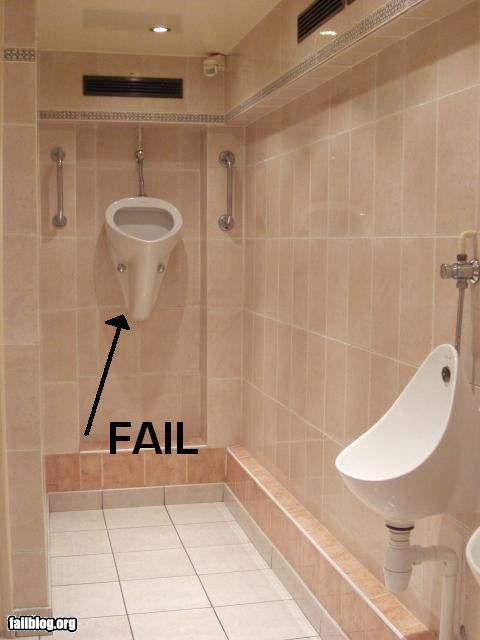
Now, I had a good time in the toilets of JFK! At first I thought I had been incredibly lucky to have been graced by a house fly in the pit of the toilet bowl that I’d chosen. But I had the presence of mind to quickly lean towards my right and peep in the pit of the urinal bowl next to mine. There was a fly there as well! So ignoring the other fly of metal, I stepped back and realised that all gleaming pits of white porcelain had flies sitting in them! What do they eat/drink around here, I thought! I peered into the pot – not quite deep though – to realise that these were stickers of flies! Aha! They looked very real though. So, in this age of financial prudence, I think these innovations play on man’s primordial male instinct best demonstrated by a ceremonial territorial marking ritual accompanied by an emphatic subjugation of any encroachers. Modern male travellers are expected to give in to their natural calls and try to kill the fly when they go about doing their business. This adroit chaperoning of jets (we’re at the airport, you see!) must be delivering twin benefits – A) it keeps the fun centered in or around the intended target thereby minimising the chances of a spillover and B) replacing a worn out sticker of a fly would be cheaper than replaced rapidly eroding cakes of disinfectants and sanitizers. The soccer inspired toilet design on the right also achieves this goal.

I am sure each and every one of my male readers would have experienced and participated in the “avoidance process of natural selection”. But I do have some lady audience and this might interest them as I now talk about some behind the doors stereotypes. The psychology of independence, dear ladies, and a need for marking out a personal territory distinguishes men and is quite well documented in various websites on the internet. If a man comes in to an empty bank of urinals, he will usually choose the one on the extreme end. the next one will pick up the one on the other extreme followed by a middle one getting picked up last. This is not how most men behave when making investing decisions. If you stumble on a urinal along with a Warren Buffett or a Peter Lynch or RJ, I guess its ok to break this rule, but mostly the herding instinct lives itself out in the outside world. Many years ago I used to work in downtown Mumbai and take local trains to get back to my home in the suburbs. If some day I left early (Dalal Street closes at 3:30PM),  i’d invariably come across a gentleman, chewing on chikki and calling up every contact in his phone address book to verfiy the creddentials of a hot tip that he’d received! The need to build consensus before investing/trading is rampant.

Contrarian investing can offer a good edge over conventional consensus based investing. Is today the right time for a contrarian approach? No idea – local Indian markets certainly do not look like that. But the US perhaps, yes. The approach surely works since one operates on assets that are mispriced – both too high and too low. And the good thing is that it lowers the risk in case the investment logic turns out to be wrong.

The second investing lesson which urinals can teach us concerns special situations – mergers, acquisitions, covertible debentures, buy backs, turnarounds, etc. Not many understand, but there is a very high liklihood of discovering money being left on the table in such cases. There are quite a few special situation mutual funds available for purchase in the Indian marketplace currently. Buffett did special situations investing a lot – easy pickings really, if you understood the math and risks involved.  Special situations are highly probabilistic and it’s difficult striking a home run consistently. They end up failing many times – at least for me. South Indian Bank forever remains an attractive takeover target. IFCI’s obtaining of a banking license remains in limbo. Some people talked up the story of PNB Gilts folding up into it’s parent but nothing happened. I feel it’s best to leave special situations to experts. For example, the toilet on the third picture below – built for Spiderman perhaps? The first two seem to be customised for Zohan Dvir and Borat Sagdiyev?

 Following are some examples of special situations. Trust that you will be able to spot, mergers, turnarounds, etc.


The Facebook

Running around between client and my company’s offices and getting to adjust to the time that I have gained, just wanted to quickly share two updates:

A) Apropos my post of 5Aug’10, the daughter moves up to the national round of the spelling bee. This gig will be held in Calcutta on 10Oct’10 – I plan to be there (work permitting) and catch up on some friends there as well. I’ll leave the wordy matters to my daughter!

B) Just finished reading The Facebook Effect by David Kirkpatrick. The copy of the book that I have was published this year itself and is therefore quite current. As you all know this book should tell the story of the teenager that built this social networking behemoth, which it does quite well but it is a quite patronising at times. Many times the butter is laid on so thick on this new toast of the internet industry that it stops your reading momentum and distracts you. This review by Michael Arrington likens the author to Bella, painfully and proudly obsessed by the fang toothed The Facebook. Perhaps it is not The Twilight of his writing career! It’s a good read nevertheless since it allows you a peek into the culture that built the company. More than that it’s really a management lesson in one basic trait that most professionals of today must have: focus.

The one quality that Mark Zuckerberg demostrates to us in spades,via Kirkpatrick’s eulogy, is an unwavering focus on the end game: world domination of internet social communication and building a self contained universe therein. And the passion and hard work that went into building the platform that now has close to a billion people online. I keep seeing hordes of people hunched over their laptops in my hotel lobby since the lobby has free internet. Last evening, I discreetly checked out a dozen or so laptop screens and I found that 10 of them had The Facebook on them! My hotel being a touristy one, these people are obvisouly from outside of NY updating their statuses and travel notes on their The Facebook profiles telling all their ‘friends’ about the great time that they are having here. The Facebook, likewise has always been a viral phenomenon.

The possibilities on a global spider web of personal connections are endless. There are talks of a parallel economy with alternate currency units (facebook credits) and perhaps a currency exchange as well off The Facebook. And the growth has not petered out – there are still many people that are not on The Facebook. Myself included. Every month I get at least 4 – 5 invitations to join it but have resisted so far. I have my reasons and thats that but in my own little way I can see the viral effect in full play. While I remain humbled to receive such requests from my friends, I have picked up one little business lesson here – try to build solitions that can be viral in their propagation. Satisfied/ecstatic customers selling your products is the best possible thing to have. I keep trying to come up with insights and solutions that help solve a pervading industry pain point and then get happy and ‘cured’ customers to advocate their bliss on platforms specifically created for this purpose.

Mark’s platform has had its share of problems though the chief among them being intrusion of privacy and data theft by application developers/advertisers. I think that The Facebook architecture needs to evolve. Just think about how relationships are laid out in real life – our social relationships are like layers of an onion. We all have an inner circle of relationships whom we trust the most and can bare our soul fearlessly. Then there is another layer where the information is quite cordial and a lot of personal information does get shared but we would never go au naturel with them. Finally, the outmost layer are casual acquantances. I am not sure if this layering of contacts exists in The Facebook. I am sure Mark and his design team would have thought of it, but if the platform has to resemble the physical world then this layering might be required. At one point in time I was accussed of not having friends – while I don’t know which layer the readers of this site belong to, I can definitely tell you that I, for sure do not need The Facebook to keep my social synapses alive. But for those of you who are on The Facebook, please do let me know if and how I can use it to promote this website.

In the meanwhile, equity markets back home continue to rock and I feel that my trade on Reliance Industries Ltd. (RIL) seems to have redeeemed itself! I’m up 4% now 🙂

I know you do not follow the “experts” and like to think for yourself and might already be aware that India Infoline has come up with  a price target of 1,141; Geogit BNP Paribas has a long term date on RIL to end at 1,450 (16-24 mo). As far as I am concerned, I think there is a small amount of steam left here and I will get out soon (if I can remain awake during tomorrow’s India trading hours – or on my return)

AWOL – II

In NYC till coming Monday…

AWOL – I

Travelling upcountry today….to sell off some agricultural strip of land. Therefore will not be able to post today.

Earth, Lights and Money

The night lights of the world, India and parts of Asia look like these (click images to enlarge):

I was surprised to see India pretty well lit up and not looking too bad on the world slate. I now know why the BJPs India Shining political campaign did not work on terra firma – since it you can see this only from extremely high altitudes and politics is all about keeping your ear to the ground. To me Japan looks the brighest and USA a very close second. Africa is truly the dark continent. Given what is now being said about Nigeria and Ghana, I guess they’ll light up in the decades to come. South Africa, as expected stands out and so does the Nile channel in Egypt. Western Europe, is aglow with the prosperous lumens that dissipate quickly as one moves eastward eventually following the path of the Trans Siberian Railway. If the natural earth glow is filtered out, I’d have missed Australia completely. And finally, China is well lit on its eastern side. The fact that the eastern sides of largish land masses are better lit than the western side is striking. The US east coast, China’s eastern provinces, Australia, the African continent, South America, the sliver of light that is Japan, UK, the Meditteranean Coast – all have brighter eastern sides. Why? The exception seems to be India. Its east side is darker.

From personal aerial experience I know for sure that Mumbai shines the brightest of all Indian cities. I guess it’s got to do with two factors – A) density of population in an area and B) the degree of urbanization. The latter is more important, I think since while Mumbai has the world’s largest slum, the slum lights will fade out if seen from such high an altitude. These are closely placed street lights (the streets lights in Hyderabad are not closely placed at all) and residential light fixtures. Highway lights again, would get too diffused, I think. But just take a look at the Indus basin. No wonder the rich alluvial soil and the 5 rivers spawned the Indus Valley Civilization 5000 years ago. The Punjab provinces (both Indian and Pakistani side) seem to be bathed in white! On the other hand, you just cannot make out the path of the Ganges at all. Beats me. Also, if you follow my eye, you can almost see the lights carving out the combined boundary of Maharashtra and Andhra Pradesh. Leaving out Orrisa, Chattisgarh, Madhya Pradesh and Jharkhand in the dark. It’s almost as if the previous two states had dotted light beacons along their perimeters. Is there a correlation between insurgency and electricity consumption? The problem of naxalism seems to be hitting states that are darker at night. And therein lies the answer – light up these areas and the arms that hold the guns will pick up laptops instead. Alas! If wishes were horses, beggars would ride – read my latest tweet on our Government crazy Robin Hood logic. Agreed, that the income disparity amongst states needs to be reduced. But don’t do this by making the richer states poorer! The New Delhi think tank is tackling the problem of runaway food inflation in the agrarian states of India (Punjab, West Bengal, etc.) by increasing the procurement price of food stuff. Their logic is if food prices are increasing (it’s c20% in these states), lets give more money to the farmers so that they can afford to buy more. How can you fight inflation by increasing prices?

Leaving bumbling babus behind, I panned out to look at Asia and peg the two big neighbours against each other. The electricity consumption in India is quite less as compared to China. Now, while China has a much larger land mass, much of China is in its east. Also, the land masses of eastern China and India are almost equal in size. So what explains the fact that despite the higher consumption of electricity by China it does not appear brighter than India? China seems to consume 3,650 TWH of electrcity per annum (a neat 10 TWH per day!) as compared to just 568 TWH/yr for India. So, eastern China should appear 6 – 7 times as bright, right? I guess whats happening is that almost all of the incremental electricity (as compared to what India eats up) is being used to fire the foundries that line up the dragon’s belly.  This article from China Daily sheds some light on the issue. Are the Chinese producing too much too soon. Maybe they should slow down.

This sudden reading up on lights, lighting and night lights came about when I was contemplating a company called MIC Electronics – they’re the LED solutions company that’s lighting up stadia, streets, festival venues, the Commonwealth Games, village lanterns, railway coaches, airports etc. They’ve got a nice banner on their website and the spooky thing is that this company is also from Hyderabad! God knows whats wrong with me – Shakti Met Dor, Hyderabad Industries (contemplating) and now this! It’s a nice city ok, perhaps a bit sleepy but investing like this is crazy. I’ve taken up a small position in this company so that I don’t lose track of it and am reminded that I need to think more about it. I read a reseach report about it sometime back but as yet I am not fully convinced that it has the power to light up my portfolio. My first issue with this company is that it currently shows up at rank 33 when I search for “LED lighting india” in Google. Which is not that bad considering that A) they are largely B2B and that B) this website itself shows up at rank 58 in a google search on Kaushal! And no, I have not heard of search engine optimisation – but maybe the MIC guys have? Actually doesn’t matter since they largely sell to people like Indian Railways and other assorted organisations who don’t really need Google to find out about them.

World Badminton Championship

Saina Nehwal has won her first two matches and plays 6th seed Shixian Wang tomorrow. Shixian Wang comes into the quarter finals beating Jie Yao, the 11th seed in a slightly more emphatic style. So lets see if Saina can enter the semis. The other quarter final to watch tomorrow is between Hongyan Pi (5) and Xin Wang (3). The winner of this match will clash with the winner of Saina vs. Shixian in the semi final.

Meanwhile current world number one, Yihan Wang is out of the tournament. [update 8PM IST, 27Aug: She’s out of the tournament. Toobad – but I think she was outclassed well and truly in 34 minues flat]

BTW, I made one observation about tags and google searches and hits on websites. It’s quite surprising that not a single soul has stumbled upon my website through google using the search phrase “Saina Nehwal”. So I ran a quick analysis on what search topics have been most successful in diverting traffic to my website and the result was quite an eye opener. Other than searching for me, people who spend their time looking for fairness creams and pani puris are more likely to come up to my site as compared to people looking up John Abraham’s butt or Katrina Kaif. Or Saina Nehwal for that matter. I felt quite let down since the whole purpose of writing about that man’s butt was to get more iballs. I thought about it for a couple of minutes and then guessed what must be amiss with my logic.

It’s the thing about statistical long tails and probabilities. Since Saina, Katrina and butts are much written about the chances of my humble ramblings on them getting shown up early enough in Google search rankings is miniscule. But since the likes of pani puris, fairness creams and IFCI sit on the long tail, the chances that my website will get picked up, if someone is looking up on these topics is high. It runs counter to common logic – that write about hot topics and you’ll get noticed more. Niche positioning. I am amazed at the kind of people that my writing resonates with – imagine being patronised by someone who is interested in “fairness creams for Muslim boys”! Or surfers  concerned if eating “pani puris will cause blindness”.

Some time back I had read a very insightful book called “The Long Tail: How Endless Choice is Creating Unlimited Demand” by Chris Anderson. The book talks about the growth of niche markets and specialist sales on the internet. So taking a leaf from this book and applying the conjecture developed above, I guess the key to getting more and different people to look at my website is to use many many tags (Napster, Amazon, eBay use the limitless potential of online store to stock up an enormous array of merchandise) and tags that are off center. If this post sounds like a pathetic lament to increase the traffic on my site as opposed to writing what really interests me and my core group of readers, then you hear right. Screw it. I dont care how many new sets of feet trample my online space. I will write what I want to write.

Economic Hit Men and Various Bonds

Rishab asked me to write something about infrastructure bonds which I do later in this post but before that something about the fascinating world of economic hit men (cool phrase, right?).

_______________________________________________________________________________________

Just finished reading the book “Confessions of an Economic Hit Man” by John Perkins. Fuck. What a book. I’m not referring to the writing style (which is good) but the content – a detailed narrative of the ‘corporatocracy’ of the US and the role that “Economic Hit Men (EHM)” played in it. This represents the latest form of imperialism that has played about and for almost all of us, nearly the only one during our lifetimes.

The Boston Herald newspaper likened it to something like a conceptual love child of James Bond and Milton Friedman (Nobel Prize economics laureate and advisor to Ronald Reagan). And that is exactly how I felt as I turned the pages – I kept playing and re-playing the storylines of the latest Bond films in my mind. I don’t watch much movies so Bond films are the only flicks that I can relate to in this context. Please read the book (you must) and if you can suggest some other movies (other than “The Panama Deception“) that resonate with the theme please do let me know.

John Perkins now writes about a lot of stuff on his website but I think that this book will always remain his magnum opus. In a nutshell, this is what is the core theme that Perkins talks about, of the post Jimmy Carter US:

– As the US became more and more powerful, its apetite for natural resources grew larger and larger. It’s hinterland, being as rich as it is, was never going to be enough for this world leader which has 765 (!) vehicles per 1000 people. In comparision, China is at 128 and India is just about at (ha ha ha) a dozen (though it is touted to become the larest car market by 2030)!

– So the US has always wanted to look outside its borders (just like every previous empire building state has done in the past) to secure it’s supply lines.

– But new methods were needed in the post WWII, Bretton Woods era.

– So US interests would identify countries rich with natural resources and with possibly non-democratically elected governments. The phrase ‘US interests’ is used deliberately here since it would later allow for a possible detraction and an escape route to denial and a possible high moral ground.

– Pocket the leaders of such nationalities and send in a team of consultants to the country (these would NEVER be on the payroll of the US Government)

– Cook up statistics and IRR and all assorted crap about a development plan and come up with an investment plan.

– Get the Bretton Woods sisters (the IMF and the World Bank) to provide loans. ‘Engineer’ things such that work contracts (construction activity mostly) were always awarded to US companies. Ensure that such countries remain indebted.

It talks about the assasinations of President Aguilera of Ecuador and President Torridos of Panama. Then about the US invasion of Panama (Dec 1989) to extradite President Noreiga done despite severe international opposition and violation of internal law. Air strikes on a country as threating as Panama? The book notes that the then President George H. W. Bush was under pressure to shed the wimpy image that the US media was heaping upon him. It also questions if killing thousands (though US media reported far far less) to remove one man accussed of drug trafficking, racketeering and money laundering is anti wimpy. The book says that Noreiga was negotiating with the Japanese to build a second canal in the Panama. What was interesting for me to read is that another anti-EHM, Saddam Hussein was castigated by the US for violating international law when he decided to strike Kuwait less than a year of the Panama invasion! I guess we have different laws for different states. But this time I guess Bush was able to shed his wimpy image and see his popularity ratings soar to 90% amongst the Americans and get more international support since Saddam himself was quite a dark guy. I was preparing for my board exams and seemed to miss much of this – who cares anyways when you are the most important point of your academic life. But when the twin towers were felled, I was very much hooked on to the news feeds. I talked about causality in my previous post – and now I wonder if we can see some causal relationship between today’s threat of terrorism on US soil and the policies of post Carter US. Just thinking. Hope no causality exists.

The lure of lucre and the power of world domination is understandable. The English practised their own form of ‘corporatocracy’ using the East India Company as their front. The Portguese did it though the Spanish conquistadors were more infamous and direct in their methods. I am sure even the Gupta empire in early India did it when it touched places like the Malay peninsula, Singapore, Ceylon, etc.

Whatever be the motivation and regardless of the official stand of the Government the book is a must read. It took immense resolve on the part of the author to write the book. Read it.

_______________________________________________________________________________________

From cross border economic shenanigans that look like a lift out from Bond movies to real bonds closer home:

If you remember, the recent Union budget had the Finance Minister announcing the re-introduction of tax saving infrastructure bonds. I remember having picked up some tax saving infrastructure bonds issued by ICICI and IDBI during the period 2001-2003. To save tax. My salary was lower then than what it is now and therefore a penny of tax saved had greater marginal utility, though the opportunity cost was HUGE since the equity markets were shooting up like crazy, picking themselves up from the dot com destruction. Today the situation is different since according to me the opportunity cost has reduced (not too many bargains to be found in the secondary capital market). But regardless of that, saving taxes is a virtue which increases one’s take home pay.

IFCI has been the one first off the block in issuing these infrastructure bonds. Here is the term sheet of the issue. A lot of material can be found on the internet so I will not ham. Check out this post on finwinonline – it covers the topic well. I have the following observations:

  1. All should invest. Period. Currently there is no substitute to IFCI bonds today and this gives you an INR 20,000 additional deduction from your taxable income (Section 80 CCF). Invest till 20,000 unless you are unweight and/or love investing in fixed income instruments. You can invest more, but A) you’ll not get the tax benefit and B) the yield will not be mouthwatering.
  2. While the deadline is 31Aug’10 and you need to have a demat account to apply, no need to fret in case you still have not opened a demat account. Other similar issues will indeed follow but the question is will they be at par or under or higher? (in terms of interest offered on the bonds).
  3. Since India does not (yet) have a deep corporate bond market, the Finance Ministry has done good to institute a buy back option for the bond holders after the mandatory 5 year holding period. Presence of this exit option has definitely made these 10 year bonds quite attractive to investors.
  4. The other good bit is that since these bonds would be sold through the Bombay Stock Exchange (BSE), capital gains tax will apply on redemption (instead of the gains being taxed at the individual’s tax rate) and there will be no Tax Deducted at Source (TDS).
  5. The other important aspect about the issue is the generous waiver granted by the Finance Ministry of the necessity to procure and publish credit ratings of the issue/issuer as part of the issue. This is cool, right (sarcasm)? Is that why IFCI rushed in first off the block? So, according to me, you might not lose much in case you are a bit strapped for funds at the moment and are not apply to the IFCI issue. Also, I am not aware of the % of allocation in case the total retail appications are more than the bonds available. The reason for that is that A) you have a quota of INR 20,000 to fill; B) it is quite likely that local interest rates will rise in the near future; so C) even if you have other slightly stronger issuers (LIC, IFCI, IDBI, other NBFCs?) throwing out their paper, the dip in coupon induced by their stronger credit worthiness may be offset by the rising interest rates.
  6. Appopros my earlier post re IFCI (License to Bank, dt 5Jul2010), I guess I am in two minds now given this development. It may be possible that the banking license eludes IFCI. Some people are talking about the company selling out to a strategic investor. The Government of India has people on the board of IFCI and since extant shareholding issues are yet to be sorted out, I think the banking license trigger may not apply. While the position is 9.43% in the black for me, this is yet another instance where I’ve broken one of my resolves – to never put money on investment theories which have a digital event at the core of their persuasion.

Finally, the last word on the infrastructure bonds is the sense of equality it provides us common folk while our political leaders clamour for two successive salary hikes in two weeks – and get it as well. I think there is an outstanding demand by our leaders to make their salary tax free as well. If that happens, I know that I will puke on my pizza.

Obama Speak

The US President is going around asking his fellow countrymen to produce more graduates and compete with the likes of India and China. These are good points to raise but then when this is accompanied by curbs on granting visas it begins to sound like rhetoric. All under the guise of protecting US borders! The border security bill will hike visa fees to $2,000 per applicant for companies that have fewer than 50% of its workforce as US citizens. Thats a cool $200 million bill for Indian software companies that rely heavily on “body shopping”. The standard line of the Indian industry has been a lament on the lack of the totalisation pact between the two countries. India has to contribute towards social security for the workers that it sends to the US – and if they return back to India, there is no possibility of a refund. I would welcome to hear something from Dr. Manmohan Singh on the issue. He is his usual quiet self.

While India remains preoccupied with flash floods, Kashmir, honour killings and the Commonwealth Games tamasha, China picked up the gauntlet and responded well by making outsourcing completely tax free if delivered from 21 cities. The Chinese have made no bones about the fact that they want to end India’s dominance in the sector. Should India not make a counter move to steal some foundries away from China?

India’s earlier responses sound quite pathetic to me. If the US politicians are ushering their wards back to school and hoping and helping their middle class to retain their sources of income, whats wrong with it? Cribbing about it and making it sound as if some grave injustice is being done against it is mooching. How would India feel if people across its eastern border arrived in hordes and stole away jobs? Some factions cannot even tolerate intra country movement of labour.

The rhetoric in the US however is also missing its mark. Senator Charles Schumer has called Infosys a chop shop. Its easy for the sound bytes to morph into an India/China hate undercurrent (if one does not exist already). Lou Dobbs, a popular media anchor, for instance has written a book on outsourcing and devotes much of his website to the phenomenon and how the American middle class is being killed. Is it? Don’t think so. Maybe going through a very tough phase. An important counterpoint to note is the indirect benefit that this can yield to the US.

It would be good for the US to note that the Indian middle class is gravitating towards more and more consumerism. People are seeing their incomes rise and are swiping their credit cards, buying second houses, ipods, etc. gleefully. This is allowing banks like BoA, Citibank etc to set up their shops in India. While such benefits selectively accrue to the Dells, Microsofts and BoAs of the world, the American middle class can certainly benefit. President Obama should also consider exhorting his masses to match imports (of services from China and India) with American exports to these countries. The oriental appetite for consuming intelligently designed goods and services in the occident will only grow. Americans would do well to understand one basic trait of most Indian middle classes – they are afraid to take risks. Innovation is rarely seen. While hordes of software junkies pound away at maintenance and basic software jobs, there is hardly any technological breakthroughs that emerge from this populous nation. The US has always thrived by managing risk and employing innovation which have set up a very strong financial acceptance to see capital freely flowing to fund ventures that are risky. Indians generally take the easy way out – outsourcing is one of them.

But these shifts and changes, as significant as they can be, happen slowly and the threat of the current American middle class losing its plot somewhere is indeed very real. And such Obama speak will found many takers and therefore votes. Whether the White House politicians actually act in earnest to plug the leak (which in my opinion they should not blindly do) is a different matter. Donations from many top industry groups may be funding the election expenses of these law makers.

In my opinion, its futile for the US (as a nation and culture) to fight outsourcing. Its perfectly logical and sane for the US society to agitate and therefore equally logical for the politicians to flog this sentiment for election victories. The US should focus on earning export dollars (USD should depreciate as years roll by) by tapping into the growing prosperity in China and India. India and China, on the other hand, should open up their economies further, slicing and selling off non-strategic assets to the highest bidders and generating more wealth in the process. Its a great lifetime to spend in the Indian and Chinese capital markets of today.

Another Year, Another Story

Just completed yet another revolution around the Sun today at 4:15 PM precisely. 35 full circles! 35 laps done and no pit stop yet. No sign of the chequered flag either. And yet my head is not spinning. I look the Sun straight in the eye, since He is my ruling planet. In fact, it was quite a good omen for the Sun to have burst into flames 4 days back and sent in a massive shower towards Earth.

Moving from astronomy to astrology, this is a rare moment in time when this day for me appears to be so close to a new moon. It will only be after a couple of decades that I will be able to experience this rare alingment again. Gulp! Astrology and I? I hate to admit it but I can be quite wussy sometimes!

Multiples of 5 are spooky milestones. It’s like completing a level in some video game – you feel a sense of accomplishment while bracing yourself knowing that you’ll be meeting more ogres, evil vamps and monsters in the next level. I’m going crazy thinking that the next level will take me to 40! Fuck. How embarassing. In a dastardly attempt towards self delusion, I mailed myself this birthday greeting card! I was elated when it came through. 🙂

The best gift definitely came in  the form of news that my daughter has moved up from the city round and made it to the state round of a spelling bee competition.

Finally, to brace myself for the oncoming mutants, zombies, aliens, et al, I guess I will have to do some (if not all) of the following:


– Gift myself more time. This is damn easy for a lion! I put a mental tick here even before I finished typing this sentence.

– Get trimmer and fitter. Health according to me is not wealth, but is important nevertheless. I seem to have neglected myself in the past year and the effect is showing. 🙂 I have joked many times that my weight always increases faster than my salary. But now I am serious. The new order of the rates of change is: Inflation > My weight > My salary. The future order should be My Salary > Inflation > My weight

Btw, there is a trick that most fashion/film photographers employ when shooting guys – ask the subject to stand akimbo and twist his torso 30 – 45 degrees. Take the shot from the side. Voila! You get a perfect V. Vain guy readers, try it the next time you negotiate your bathroom mirror. If you are a perfectionist then place your fist – the one which is on the camera’s right – near your trouser pocket as if poised to remove your car keys or something. Tightly spasm your other arm as if paralysed and you’re done. Just dont grimace the way John Abraham did when he was trying to hold up his beach shorts. But I digress. In my next post I will be talking a lot more about the male body, so hold on to your beach shorts till then.

– In the past, most privileged years of my being around, I have largely taken, taken, taken from the environment. Maybe I should start thinking about giving for a change. To myself 🙂

– Figure out the answer to the question about investing that has always vexed me. By the time I come back around to complete yet another revolution around the Sun, I hope to be in a better position to know when to sell!

– Pay more attention to sonny boy. Had sat down and taught and read books with the daughter a lot but could not do so with the brat since work had exploded around the time he burst onto the scene. Thankfully, he is picking up things on his own from his sis, so I’ve sheepishly escaped! There is a pending project with him re “traffic lights” – a small scale model of a city, with roads, houses, traffic lights, petrol pumps and lots of lots of cars plying the roads – that I was to do with him last year. Hope to do it this year. Will post pics if anyone cares to watch, but won’t use Lego bricks since so many Lego bricks will turn out to be expensive. We’ll do Thermocol.

Read at least 12 books this year. Books that are unrelated to my profession. I rarely read fiction these days.

Do not read Atlas Shrugged this year! Have read it 5 – 6 times already and I think that has been one of my problems. 🙂

Stop idolising Jesse Livermore.

– Target to increase the monthly views to The Third I by 30% by end of my next turn around the Sun.

Stop paying people money to visit my website! There, I said it. Beware, some of you readers – the taxman cometh.

360 degrees to cover. 10 commandments to live by.

Design a site like this with WordPress.com
Get started