TV Everywhere? Or Nowhere?

Delhi, Mumbai, Chennai and Kolkata will replace all analog telly networks with digital ones come 1Jul’12. That’s causing a nice fight to develop between Multi System Operators (MSOs) and the Direct To Home (DTH) gang. The last mile connectivity providers, i.e. the local cable operators were being squeezed in between. However necessity has forced Dish TV, a DTH company to innovate by tying up with the local cable companies. The local cable companies will serve as the distribution channel partners of Dish TV and also as sales ushers by pushing the Dish TV set-top boxes in cable households to coincide with the first phase of cable digitization which begins on 1Jul’12. All very nice and funny since Dish TV earlier used to tout itself as a business which provided an alternative to the monopoly of the local cable guys (see pic alongside)! Very confusing since now there are news that the cable companies are jamming signals of DTH transmissions in Mumbai and Delhi!

Will have to see how all of this plays out – DTH companies like Dish TV and Tata Sky claim that they have shelled out close to 20k crores towards digitisation. The current debt on Dish TV’s books is Rs. 1,200 crores already with much of it being USD denominated making it very vulnerable to INR’s depreciation. A bigger concern is that the promoters had already pledged a huge “dish” full of shares and now they’ve done more. Perhaps financial stretch will force consolidation in the infantile industry. The six private DTH platforms in India are: Dish TV, Tata Sky, Sun Direct, Reliance Digital TV, Airtel Digital TV and Videocon d2h.

Here’s the trailing 18 months chart of Dish TV. It is selling at its 52 week low but that is nothing to suggest that it may not go on to celebrate its 60/70 week low as well. The chart certainly looks bearish for now, but yes, the 50 DMA may very well begin its rise leading up to the 1Jul’12 deadline. My sense says avoid. At this point in time, I have not read and studied enough about this game to form any opinion at all. But yes, the fact that India has more than 100 million television enabled homes is very significant.

There is something seriously wrong in the Indian television and media broadcasting space. Even if the stocks are tempting on the technicals, the crazy amount of flux in the industry is just reason enough to avoid punting in them. There is a bit of a chorus coming out about Dish TV being under-valued and that it is a value play now that it is at its 52 week lows. It’s being pegged at a target of 80 in 24 months! There are also reports out there which are predicting the Indian television sector to grow at 17% compounded over the next 4 – 5 years! If that be the case then why did Rupert Murdoch’s News Corp sell its stake in Hathway after staying with its investment for more than 10 years? Zee split; Den networks has packed its den with debt; media companies like NDTV, TV Today, TV18 etc are moribund as ever; Sun TV got tainted by corrupting sun spots; ENIL’s mirchi is anything but hot on the bourses; and so on….
Lets Buy Oil, Not Gold

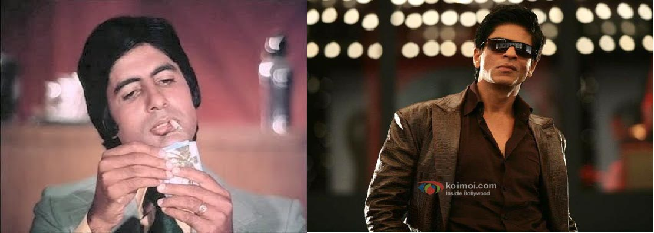
What is the difference between the professions of the Shahrukh Khan version of Don vs. the earlier one essayed by Amitabh Bachchan? The original Don was a gold smuggler while the new one pushes drugs – quite a subtle generational shift this and very much attributable to the lifting of the import duties on gold in 1992. The yellow metal had flowed in freely once the shackles were removed. The differential between the Indian price of gold vs. the UAE one reduced to a level so as to make the risk weighted returns of smuggling very low indeed. Ergo, the villians in Hindi films underwent an apt metamorphosis. Even ertswhile smugglers gave up their shady coves and wharfs and took to politics. But the smuggling never really died down – it continues to this day and the recent budgetary proposal to increase the basic customs duty on gold imported into India will certainly do its bit to not only revive this old cottage industry but also bring the old Bollywood villian out of his holster. Even godmen have dipped their toe in the pool – Swami Nityanand’s name has been doing the rounds it is said.

It’s a good thought, according to what I have read and understood provided that the authorities (read customs, BSF, RAW, etc) can lift up their game to apprehend all worth appprehending – it could turn out to be good for the economy in the longer run. They are saying that China looks all set to overtake India as the world’s largest consumer of gold – if the logic of the customs duty hike is bona fide, then this is one race which we’d be better off letting China win. As such China beats India nearly everywhere anyways. The chart alongside (via World Gold Council) hints at this. From the country’s viewpoint, gold holdings, are no different from foreign exchange reserves really – despite the fact that a huge chunk of India’s gold is in private hands and therefore cannot be mobilised easily if required to serve for national duty. Which is why the move to curb gold consumption (and therefore gold imports) by raising customs duty makes sense. We consumed 1,000 tonnes of the yellow metal in 2010 and another 933 tonnes of it during the next year! While it is clear that the current risk aversion trade and low tariffs have been responsible for this influx, the taps have been flowing all through the 70s and 80s – via the surreptitious route. Today, gold is now officially the most smuggled item to India having pipped television sets to the post. Which is why the government came out with a couple of gold mobilization drives to shore up the foreign exchange reserves. If this is the method that the planners of the economy are betting on to control the trade deficit, then I am guessing that sometime in the future we will see another issue of these gold swapped bonds/gold mop-up drives. Lets see. Remember, RBI had bought 200 tonnes of gold from the IMF sometime in late 2009. I guess they won’t be needing to do that anymore. The notion that the national stock of gold can indeed be considered as a proxy reserve of foreign exchange currency reserves is buttressed by the fact that India recently purchased oil from Iran using gold. Did you know that nearly a third of our current trade deficit is due to our purchases of gold.

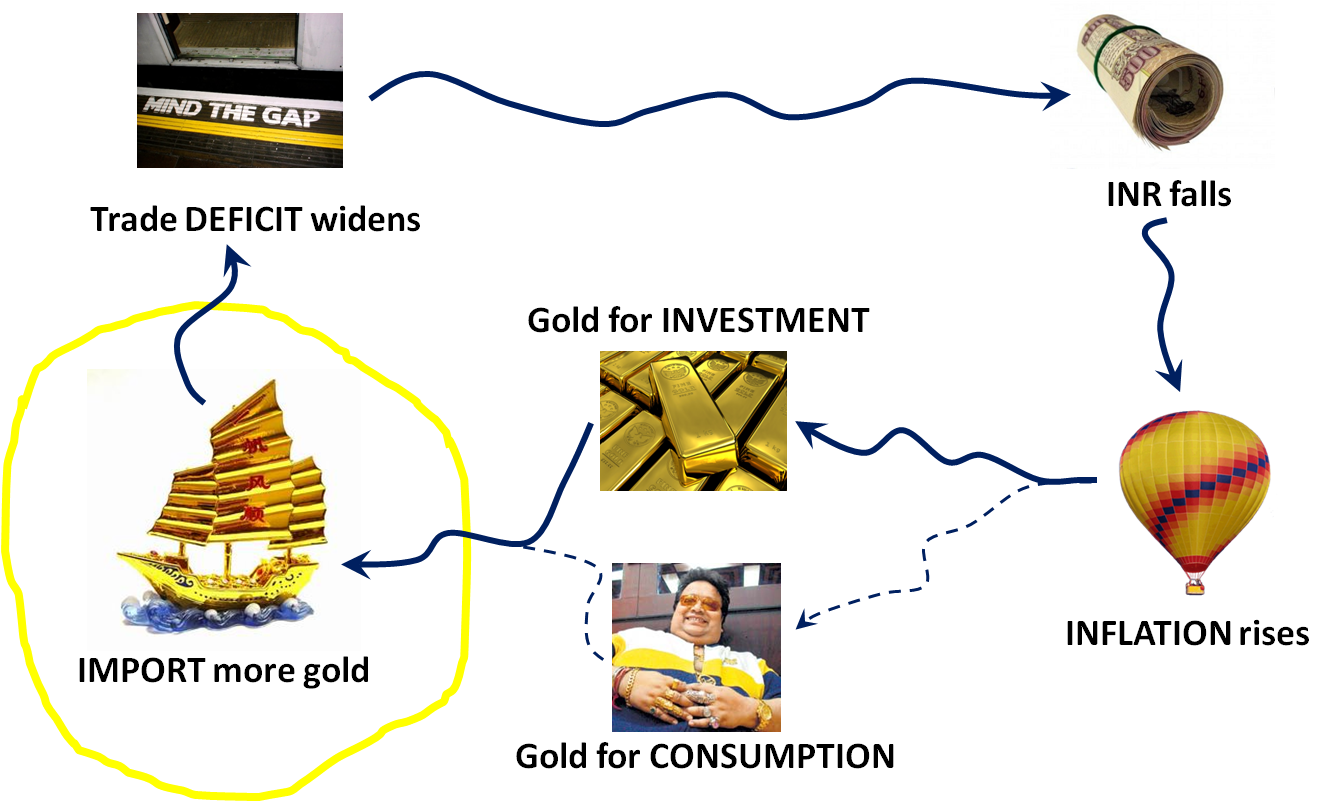
The government, via two customs duty hikes in quick succession, is hoping to provide an external stimulus that helps the economy to break out of the current gold – inflationary cycle. The customs duty hike works in the import stage which is circled in yellow in the picture alongside.

NIFTY Golden Cross

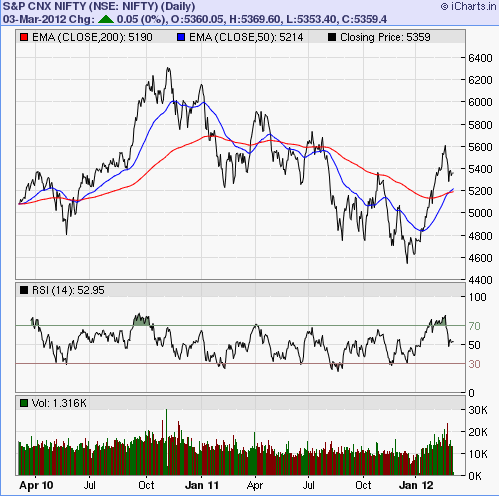
Further to the last post, here’s the trailing 18m NIFTY chart which shows that new golden cross that has just happened. The question really is – how long will the 50 DMA stay above the 200 DMA line?

NIFTY’s Crossovers

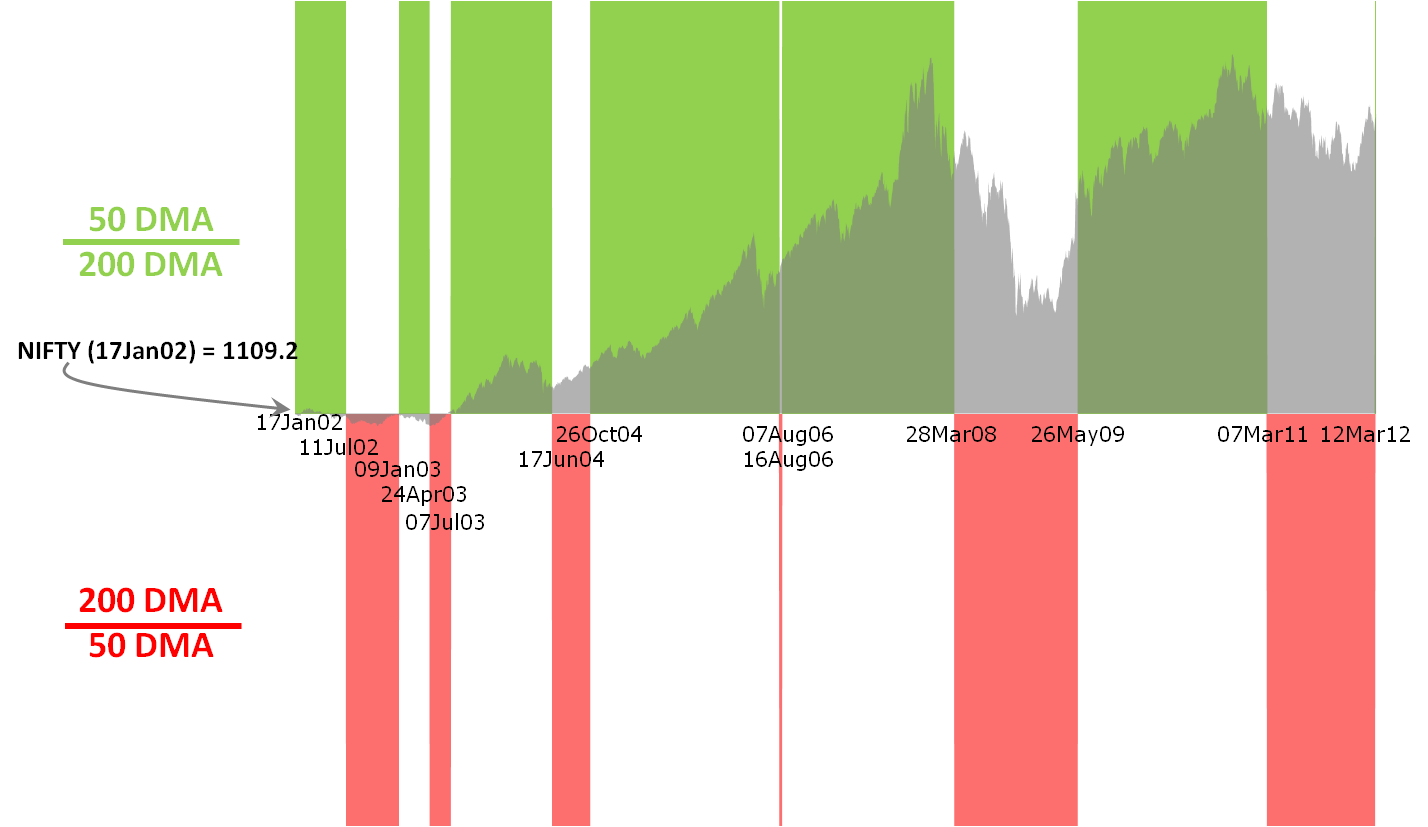
A golden cross happens when a smaller daily moving average intersects and moves above a larger daily moving average, commonly the 50 DMA squigglier line cutting above the meandering 200 DMA line. They say that golden crosses mark the transition into the bull market. Well, NIFTY sure seems to be plotting and planning a golden cross and I guess the next few days will make it clear. The budget is around the corner, so it may very well be the case of Mr. Market holding its breath, crossing his fingers and hoping that nothing stupid, unexpected or untoward happens – all the populous evil having already been factored into the price. If the day passes over (RBI is widely expected to sit out of this party having done its bit in terms of the CRR cut) then its likely that the market resumes its upward journey with the 50 DMA pulling away from the crossover point.

So, I pulled up data on the NIFTY from 2000 and charted the various crossovers between the 50 DMA and the 200 DMA. The green columns indicate days where 50 DMA > 200 DMA while the red ones are for days where 200 DMA > 50 DMA. The gray mountain range is the NIFTY during this entire period (17Jan02 to date) rebased to zero at the starting date of this chart (i.e. 17Jan02). The reason the chart starts from 17Jan02 is because I have NIFTY data from start of 200 and from that date it took upto 17Jan02 for the first golden cross to appear (if the index values before 2000 are ignored). The point is that up till now the proportion of days that the 200 DMA is greater than the 50 DMA (bearish climate) has been quite low – as you can infer visually from the chart.

Gold and Monetary Thoughts

The latest RBI working paper invites public comments on the topic “Gold Prices and Financial Stability in India“. The paper notes the recent sharp rise in international old prices; examines inter-linkages between desi and international gold prices and finally brings out the emperical observation that the implication of a correction in gold prices on the Indian financial markets is likely to be muted. I also picked up this interesting chart from the paper which compares the real and nominal prices of gold right from 1971. Interesting to note that the precious metal has never “really” breached the USD800/ounce mark, though it came very close to challenging that limit, during 1979/80 and 2011. The nominal price high has been ~$1,900 which came in Nov’11.
Shiploads worth of unaccounted wealth has always kept the demand for gold very high in India, making even someone like John Maynard Keynes liken our desi fixation for it as a ‘ruinous love of a barbaric relic‘. The paper notes this pre-historic Indian yearing for gold but then it makes a point which I don’t quite follow: the authors (of the paper) measure some important macro-economic parameters and restate them in gold terms; and observe that the value of these indicators has actually fallen in gold terms and therefore they conclude that gold must not be in ‘bubble territory’. Duh. Anyways, the paper also notes the fact that the really devastating asset bubbles are the ones that take the banking sector down with it – the dot-com bust has certainly caused lesser damage than the sub-prime crisis. I read up on some literature on the internet on this notion of complicity of the banking sector in global recessions and noted the events that have lead us to today’s line of monetary thinking:

By the 1830s, in England, it was generally believed that the mere legal requirement that the liabilities of the banking system (i.e. public deposits) be convertible to gold on demand was not sufficient to prevent various economic crises. So, in 1844 they introduced the Bank Charter Act which established a currency board – based on gold – to eliminate the banking system’s ability to create fluctuations in money supply. Between prices and money supply, it was firmly believed that prices were the effect and the supply of money was the cause. However, economic crises continued to persist in England in 1847, 1853 and 1865. The prime reason cited for these crises was that the framers of economic policy had not paid much attention to the role of bank deposits in the monetary system.

So, as a result of this, by the 1870s, monetary thinking brought in the concept of the Bank of England being the ‘lender of last resort’ . Gold convertibility was never in question and though financial crises did occur in England from time to time, none involved bank failures. The British experience was well known to observers in the US, where crises involving bank failures were a regular feature of the financial landscape until 1914 – this provided an important impetus for the founding of the Federal Reserve System and there onwards to the following 4 phases:

1. Classical Gold Standard (1880 – 1914): Governments accorded the highest priority to maintaining fixed prices of their currencies in terms of gold.

2. Interwar Gold Exchange Standard (1925 – 39): The techniques developed during the era of convertibility under the gold standard proved insufficient when the need of the hour was to ensure and provide domestic macro stability – ultimately resulting in the Great Depression. Countries cared little about their ‘neighbours’ and freely debased their currencies in order to make exports more attractive in order to grab a slice of the post war economy rebuilding opportunities.

3. The Bretton Woods International Monetary System (1944 – 71): Post WWII, ex Allied nations favoured a regulated system of fixed exchage rates, indirectly disciplined by the USD, which in turn was pegged to gold. All agreed on the need for tight controls. ‘Beggar thy neighbour’ no more. 

4. Managed Float (current): The great inflation of the 70s made policy makers re-emphasize the goal of low inflation and to commit themselves to convertibility-rule like behaviour. USA broke away from the Bretton Wood fetters and freed up the USD from the gold overhang. USD thus became a fully fiat currency.

So the cycle continues and gold (in real terms) has again risen to levels that it earlier saw during the runaway inflation levels of the 70s. Gold has always been central to monetary thinking – even in its divorce from monetary planning in recent times, the need for gold is as important as before – by proxy. When a currency becomes fiat – it derives its value from it’s issuer country’s regulations and policies. The modern economic policy of low inflation and mindless credit expansion has all but effectively debased these fiat currencies (USD and EURO). Therefore, the growing interest (and price increase) in gold under the hope that the current regime of managed float will end and we will move back to the era of tighter monetary regulations backed by gold. According to me, if that happens then fluctuations in the price of gold will most certainly impact prices and financial stability. The probability of occurrence of that happening anytime soon is incomprehensible to me. You need an expert to opine on that – but I’d just say that the world revolves around the USD – fiat or not.

The banking sector has very much been in the eye of the storm during the current economic crisis and therefore no one would play blind on a bet that gold may not breach the $900 psychological mark…

REC Tax Free Bonds

 I just applied for 1L worth of tax free bonds from the Rural Electrification Corp (REC) whose IPO opened today. This appears to be the last opportunity this year to buy tax free bonds and the application window is open till 12Mar (very small really). Unless you have pigged up heavily on fixed income, this issue should warrant more than a cursory glance by you. Here are the salient points from the prospectus (click here):

  • Ratings: “CRISIL AAA/Stable”, “CARE AAA” , “FITCH AAA(ind)” and “[ICRA]AAA”. So from that perspective looks to carry a low credit risk
  • No one’s underwriting the issue. No one wanted to or did the AAA ratings make REC say no to middlemen?
  • Usual 3 categories but NRIs absent from the scope. Sad. This is apparently to ensure that the allotment etc gets done within this FY and some folks say that involving our foreign bhais will slow down things. In any case the previous issues by NHAI, HUDCO etc took more than a month to get listed.
  • Interest of 8.13% for 10 yr and 8.32% for 15 yr bond for Category III (retail rats). 750 crores (25%) of the issue is reserved for Category III which means if more than 75,000 individual applications come in at cut-off, then the allocation game of dice will play out. Allotment will be made on a first come first served basis. In case it gets oversubscribed (which I assume it should) then if your application reached the bankers one day prior to the date when oversubscription occurred, you’d get the FCFS treatment else you’d get proportionate to your application amount. So it pays to apply early. The recent NHAI tax free issue was oversubscribed by 2.5 times.
  • The NHAI tax free bond, while it took its sweet time to list, jumped up immediately when it listed on 7/8 of Feb’12. It went up some 2 – 3% during listing time – which means that tax-free bonds are best bought during their IPOs and not from the secondary markets.
  • The 09.15 G-Sec maturing on 2024 (12 years to go) is trading at yield spreads of 8.27% – 8.28%. (http://www.ccilindia.com/OMHome.aspx)
  • Interest will be payable yearly on 1Jul. Would’ve been nice for Category III to get a cumulative interest option. Even then, 10 yr bank deposits offer less than 10% today and when you bake in the tax benefit (if you are in the highest tax bracket, these bonds give you a return of ~11.5% or so.
  • While you can apply in lots of 5 bonds (fv 1000/- each) you can sell one bond at a time, if you wish. Given heavy institutional interest for the 10 year paper, liquidity and therefore demand is likely to be high on that and therefore price of the bond on the secondary market (will list & trade on BSE) should be higher. If RBI does start dunking down interest rates towards the latter part of the year, then the price will canter up more. But capital gains tax will apply.  

It was good that IRFC’s (which is the financing arm of Indian Railways) budgeting went a bit awry (their plan size for FY11/12 was cut by 16%) and they could not use up their quota of tax-free bonds. That slack got transferred to REC instead of the Government allowing railways to roll over its unutilized portion to next FY. The Government had allowed INR 30,000 crores to be raised by infra sector PSUs during the current FY via the tax free bonds route. Assuming an interest payout of 8% this translates to a servicing cost of 2,400 crores. Assuming a low tax rate of 20%, this translates to INR 480 crores of income forgone by the Government which means a margin give up of 1.6%. But I guess that’s small change if you get INR 300 bn of capital in a year to fund infra building…

This is surely a good thing – I hope that the FM announces an even higher quota for the next FY.

Confirmation Next Week?

The NIFTY chart is poised at an interesting point as at this weekend. The 50 EMA is about to deliver a right uppercut to the 200EMA…hopefully. If it does, then I guess the bull market will be really, really confirmed. Budget dithering and the slipperiness due to oil may keep the 200EMA above the 50EMA though…

Lupin’s about to break out, Gitanjali and Godrej Industries are doing awesome; so is my relatively recent pick – Jubilant Foodworks. I’m long a NIFTY ETF as well…looks like the smile may just about be coming back…fingers X’d

Give Me Money: Print it or Release the Repo Floodgates

This is what I’ve been telling some people around me these days…

Now that we all know that the latest quarterly GDP growth number is 6.1%, I guess my thoughts on inflation & interest rates (here) will turn true and the RBI will start easing down policy rates. I guess if that happens then I will finally be able to redeeem the Axis Banks and the HDFC Banks that I have on my books.

What’s a good bond fund to go long on now? Need to find out. I resolve everytime not to practise the ‘trapper’ style of investing, but always fall prey to it.

A ‘trapper’ style of investing is a personal term I’ve created to remind me on the numerous opportunity losses I have incurred investing on a hunch and waiting for that event to play out, snaring my capital in the process – not to mention some real losses as well. I guess. An example is the big hue and cry around the possibility of IFCI being converted into a bank. I had given in to the temptation and put in a modest amount, laid the ‘trap’ and waited, waited, waited for the poor animals that make our financial jungle to fall into it. I guess the only trap that played out here was that my capital got trapped. 🙂 I can recollect so many other examples from my personal trading journal – the government is about to come out with a favourable policy on cement and lift the restriction on cement prices: so lets pick a clinker crusher or two and wait by the trap! Ditto with sugar stocks some time back. Even before there was that shine which many had taken to PSUs under the hope that they’ll be monetized by the Government’s disinvestment program. Cut to today – have you noticed all those articles and pop-ups, emails, even sms’ and tweets advising “stocks to buy ahead of the budget”, “hot sectors during budget 2012” etc etc. Avoid this noise please. If you remember conditional probabilities and Baye’s Theorem from your maths classes, your chances of making money are highly conditional – probability of (BEL going up) given that budget makes provision/announcement regarding defence etc etc.

Emerging Markets: 2012-’18

Foreign Institutional Investors (FIIs) had mostly stayed away from Indian equities during 2011. While around 20,000 crores were brought into the debt markets some 3,000 crore worth of net equity positions were withdrawn from India. I guess it took the softening of  inflation and the subsequent cessation of the interest rate hikes that got this hot money back to India. Its FII money that mostly contributes to the volatility of Indian stocks. So, the more one studies whats happening across the globe – what the top fund houses, hedgies etc are saying, the better prepared you are to take a stance wrt to the Indian scene.

This calendar year, we have seen the return of this fickle capital to India and other emerging market stock exchanges. They are saying that FII flows into Indian stocks have already reached $4 bn in 2012! Mind you, we have seen 56 days in 2012 till now – a good 300+ days are yet to pass us by. Will this deluge of foreign capital continue to build up? Most certainly not. But before the tap runs dry and the vacuum switches on, I think it looks likely for the NIFTY to at least climb right all the way up to 5900? While that’s a good 8.7% points away from current levels of the NIFTY, I think it’s certainly achievable given the very bullish set-up and the decent correction/pause in the rise of the Index given the option expiry/rollovers for the Feb series. So with all that covering up and rolling over completed, I am hopeful of another 7% – 8% rise of the NIFTY. It will then be a good time to unwind the non-core positions.

There is however an interesting view put out by Jeffrey Frankel (Professor of Capital Formation & Growth at Harvard University) who points out to the cyclicality in the occurrences of troughs or crises in emerging markets asset class. He serves on the “Business Cycle Dating Committee” in the United States – whose job it is to declare the official start and end dates of recessions. So, he has a view on past emerging markets’ economic cycles and where the emerging markets are in the current cycle. Frankel draws attention to the earliest references to economic cycles perhaps came from the Old Testament, where the Pharoah orders Joseph (the chief architect) to build stockpiles of food grains as the Nile flowed in plenty for 7 years and then it relatively dried up for the next 7 years. So there were 14 year cycles then. While I am not sure if Egypt of biblical times could be called an emerging market, but closer to our times, Frankel notes that during 1975-81 (7 years) we had a phase which marked plentiful capital flows to emerging markets [recycling of petrodollars in the form of loans to developing countries]. Then the period from 1982 – 89 saw the international debt crisis which spread out from Mexico with these 7 years being referred to as the ‘lost decade’ in Latin America. 1989 saw the issue of the Brady Bonds [where the Latin American countries dunked their currencies and issued bonds denominated in US Dollars] which helped the Latin American nations move over from the capital drought. The period from 1990 -96 was obviously marked by crazy capital flows to emerging market countries. Then came the East Asia crisis of 1997 and another 7 years of capital drought. So that took us to 2003/04. Now, the period from 2003/04 to 2010/11 has seen the third cycle of net capital inflows into emerging markets – will the period from 2011 – 2018 be the next drought period? We can answer these questions only in hindsight. A lone swallow does not a summer make – i.e. the eagerness which the $4bn of today has shown in coming over to the Indian stock market can easily turn into a nervous stampede out of the country. Then this would be a mere blip in the 14 year cycle charts. If you look at the chart at the start of this post, the period of rapid rise of the MSCI Emerging Markets Index during the period 2003 – ’08 was really the time when capital flowed in so freely into emerging party spots. Now, the preceding 7 year period was from 1997 – ’03 during which time the index lost ~50% of its value. Scary? So if this logic holds good then is it appropriate to surmise that A) we are headed down and B) the top of 2008 will not be taken out till 2018 at least.

There are ends of beginnings of ends and then there are beginnings of ends of beginning. It’s difficult for simple people like me to say what is beginning and what is ending, but there is a neat little tidal wave of money coming in on the bourses where my hard-earned money rests and I am going to ride the wave for now. Amen.

Redignton, Pennar on charts

Redington India is a very low margin game (PAT margins ~ 1.3%) and the company is piling on foreign debt to finance buyback of stake in one of its subsidiaries from a private equity investor. Now interest servicing costs and its core business are both long the INR. It’s anyone’s guess really, but there could be some who are predicting that the INR will rise up from here – will that be able to take up the price of this stock to 100? If look at the price chart on the right (trailing 18 months), it does look like a coiled spring – what remains to be seen is which way will it uncoil. Up or down?

Now there is a company headquartered less than a kilometer from my residence: the integrated engineering company called Pennar Industies. Is proximity to where you live a good reason to invest in a company? The stock really has just dropped and dropped but I read somewhere that a venture capital investor has picked up a 7.74% stake through secondary market purchases spread over the past 6 months. Well, they certainly managed to strike their purchases within the narrow 37 – 40 price band. This gives a valuation of ~450 crores to the company. The current market cap is ~ 414 crores so that looks like fair. The investors’ presentation on the company’s website puts the replacement value of the business at 700 crores as compared to its gross block of 345 crores. Now, on a consolidated net sales of ~ 1,200 crores, the mcap looks like well, ummm. Even with a net profit margin of ~ 6%, the mcap to sales ratio looks a bit low. Its chart (on the right) also shows what looks like a bollinger band squeeze. Is this the nadir for this stock? Good to plonk a small amount? I guess i’ll sleep over it and at least wait for the 50 SMA line to cur above the 200 SMA line. Have to check leverage and shares pledged, if any.

Design a site like this with WordPress.com
Get started